EU Packaging & Packaging Waste Regulation (PPWR) Compliance Guide for E-commerce
 VATAi Team
The EU’s Packaging & Packaging Waste Regulation (PPWR) is one of the most impactful sustainability regulations for e-commerce businesses selling into Europe.
If you sell to EU customers through marketplaces like Amazon, Shopify, or your own online store, PPWR will affect:
- How you design and source packaging
- How you pack and ship orders
- How packaging is labelled
- Your Extended Producer Responsibility (EPR) obligations across EU markets
This guide explains what PPWR means in practical terms and what sellers should do now to prepare.
What Is the EU Packaging & Packaging Waste Regulation (PPWR)?
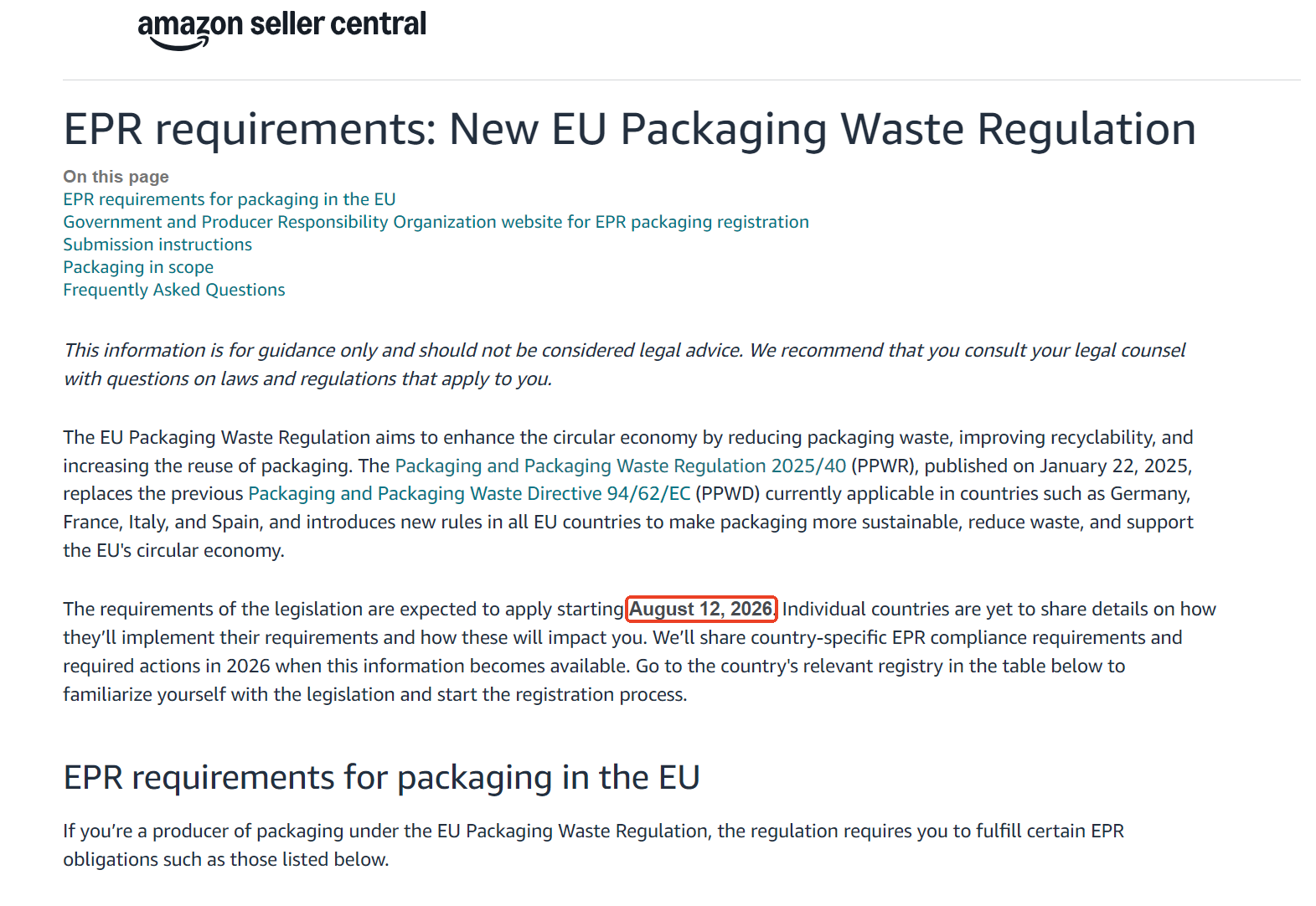
The Packaging & Packaging Waste Regulation (PPWR) (Regulation (EU) 2025/40) is the EU’s new legal framework governing packaging placed on the EU market.
Unlike the previous directive-based system, a regulation applies directly across all EU Member States, helping harmonise requirements and enforcement expectations across the EU internal market.
PPWR aims to:
- Reduce packaging waste
- Improve recyclability and reuse
- Promote a circular economy
- Harmonise packaging rules across the EU
For e-commerce sellers, the shift is clear: compliance is moving toward measurable packaging performance and lifecycle responsibility, not just general sustainability claims.
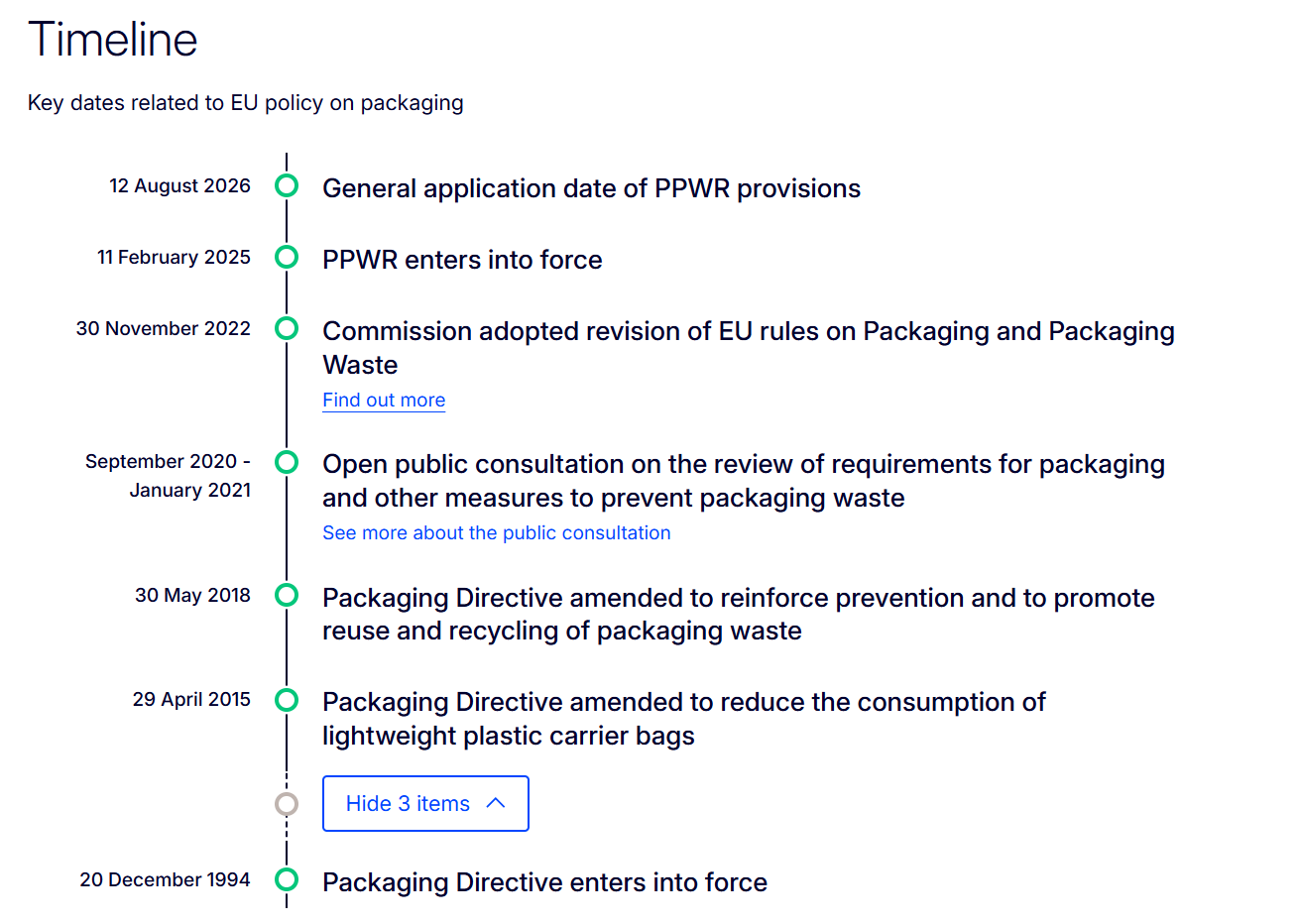
PPWR Timeline: Key Dates
- February 2025 – PPWR entered into force
- 12 August 2026 – General application begins ⚠
- 2028 onward – Harmonized EU labeling expected
- 2030 – Major recyclability and packaging optimization targets apply
- 2035–2040 – Additional waste-reduction milestones
The period from 2026–2030 is the most critical transition window for sellers.
Who Must Comply With PPWR?
PPWR applies to all economic operators placing packaging on the EU market, including:
- Manufacturers of packaged goods
- Importers and distributors
- Online retailers and e-commerce sellers
- Marketplaces and fulfillment service providers
- Non-EU brands exporting to the EU
This means non-EU sellers must comply if their products and related packaging are introduced to EU consumers or businesses.
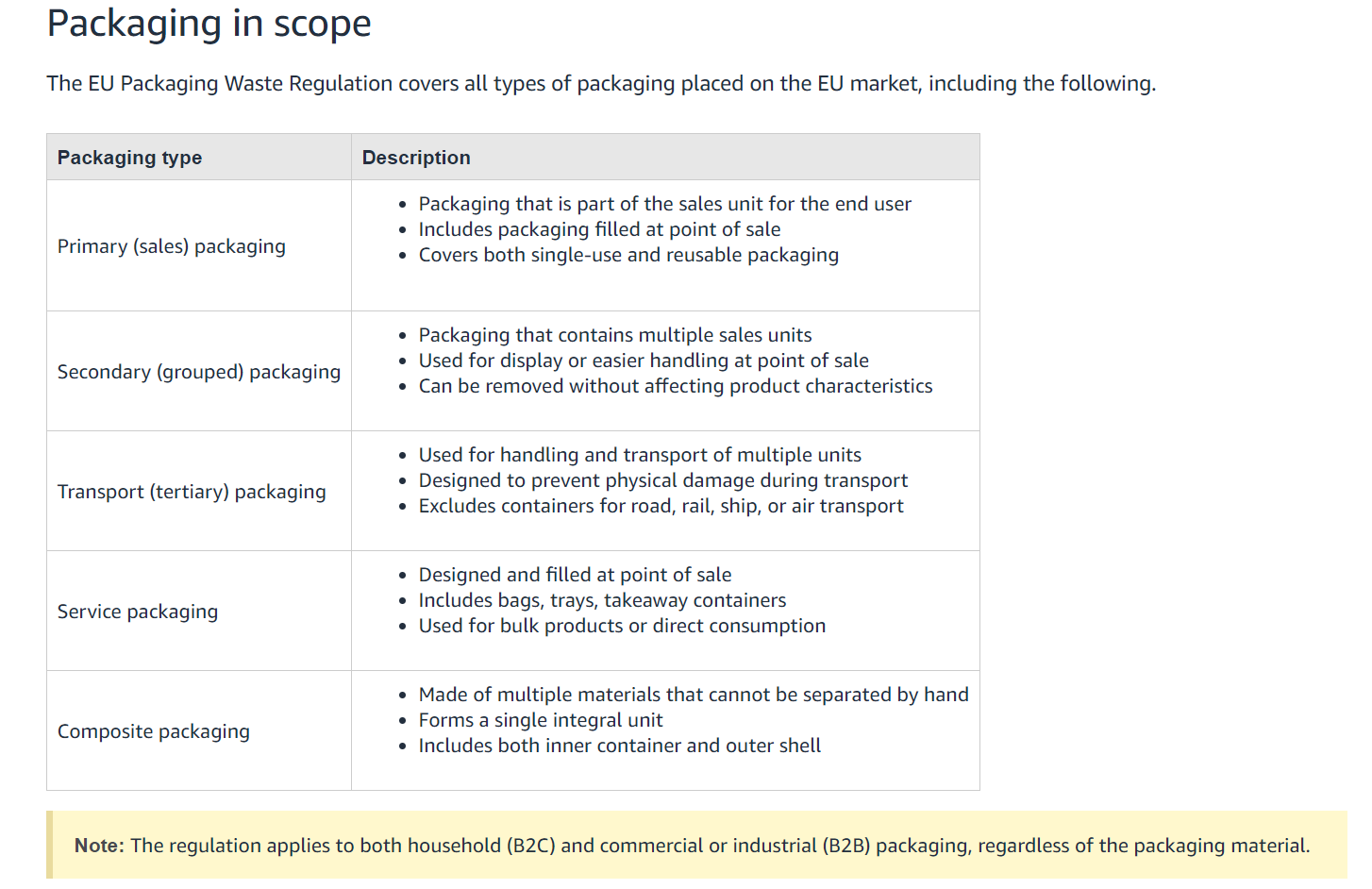
What Counts as “Packaging”?
PPWR covers virtually all packaging types, including:
- Primary product packaging
- E-commerce and transport packaging
- Secondary and grouped packaging
- Service packaging (e.g., bags, wraps)
The regulation addresses packaging throughout its lifecycle — from design and material choice to use, collection, and recycling.
Core PPWR Requirements Sellers Should Know
1) Recyclability & Reuse by Design
Packaging must be designed for real recyclability and reuse — not just marketed as sustainable. Packaging should be compatible with EU collection and recycling systems. By 2030, packaging placed on the EU market is expected to meet recyclability criteria under EU rules.
What sellers can do now:
- Review packaging materials
- Avoid hard-to-recycle composites
- Work with suppliers on recyclable solutions
2) Minimum Recycled Content Targets
PPWR introduces minimum recycled content thresholds, especially for plastic packaging.
These measures aim to:
- Reduce virgin material use
- Support quality recycling streams
- Strengthen demand for recycled materials
Exact percentages will be defined in delegated acts.
3) Packaging Reduction & Design Limits
The regulation encourages:
- Minimizing unnecessary packaging
- Optimizing package dimensions
- Reducing empty space and filler
This pushes sellers toward efficient, right-sized packaging tailored to product dimensions.
4) Restrictions on Harmful Substances
Packaging must comply with environmental and chemical safety standards.
Certain substances that hinder recycling or pose environmental risks are restricted, increasing the need for careful material selection.
5) Harmonized EU Labeling
PPWR introduces EU-wide labeling frameworks to help consumers and recyclers identify:
- Material composition
- Recyclability class
- Reuse potential
These requirements will be phased in over several years.
Seller implication:
Design packaging artwork flexibly to accommodate future updates.
Extended Producer Responsibility (EPR) & Reporting
EPR remains a central pillar of EU packaging law. PPWR strengthens harmonization but does not replace national systems.
Key points for sellers:
- Producers must register under national EPR schemes
- Reporting and recycling fees still apply country-by-country
- Data formats are expected to become more aligned across the EU
PPWR simplifies structure but does not eliminate local obligations.
Marketplace Compliance
Marketplaces increasingly require proof of packaging compliance.
Sellers may need to provide:
- EPR registration numbers
- Compliance declarations
- Packaging data
Failure to provide documentation can result in:
- Listing restrictions
- Marketplace-level enforcement actions
Impact on Cross-Border Sellers
For non-EU sellers:
- Compliance is mandatory when packaging enters the EU market
- Local representatives or EPR registrations may be required
- Technical documentation must be available if requested
Non-compliance can lead to fines, listing removals, or import disruptions.
How Sellers Can Prepare
Evaluate Current Packaging
Review:
- Product packaging
- Shipping boxes
- Fillers and protective materials
Assess compatibility with recyclability and reuse criteria.
Confirm EPR Registration
- Register where required
- Maintain valid numbers
- Provide data to marketplaces
Align With Recycled Content Targets
Work with suppliers to:
- Increase recycled content
- Document material composition
Prepare Technical Documentation
Maintain a compliance file including:
- Packaging materials
- Recyclability assessments
- EPR registrations
- Recycled content records
Update Marketplace Information
Ensure submitted data is accurate and current before listing products.
PPWR Timeline Snapshot
| Year | Milestone |
| 2025 | PPWR enters into force |
| Aug 2026 | General application begins |
| 2028+ | Harmonized labeling rollout |
| 2030 | Recyclability & design targets |
| 2040 | Long-term reduction goals |
PPWR represents a structural shift in EU packaging regulation. For e-commerce sellers, this means:
- Smarter packaging design
- Stronger data tracking
- Reliable EPR compliance
- More sustainable shipping practices
Early preparation helps avoid disruption and protects EU market access.
FAQ
Q1. What is PPWR and why does it matter for sellers?
PPWR is the EU’s new Packaging and Packaging Waste Regulation (Regulation (EU) 2025/40). It replaces the old packaging directive and sets directly applicable rules on how packaging must be designed, labelled and managed across all EU Member States.
Q2. Does PPWR apply to me if my business is outside the EU?
Yes. If your products and their packaging are placed on the EU market – for example shipped to EU customers or stored in EU fulfilment centres – PPWR applies, regardless of where your company is based.
Q3. From when do I need to comply?
The regulation is already in force, and most operational obligations start applying from 12 August 2026. Additional design‑for‑recycling, recycled content and waste‑reduction targets phase in between 2030 and 2040.
Q4. Will I need to change my existing packaging?
Many sellers will. Packaging that is hard to recycle, over‑packaged (too much empty space or filler) or made with restricted substances is unlikely to meet PPWR expectations and may increase EPR fees or even become non‑compliant over time.
Q5. How does PPWR affect my EPR obligations?
PPWR does not replace national EPR schemes. You still need to register and report under packaging EPR in each relevant EU country, but data requirements and eco‑fees will increasingly reflect recyclability, recycled content and packaging reduction.
Q6. What are the main practical steps sellers should take now?
Start by auditing your packaging, talking to suppliers about recyclability and recycled content, checking your EPR registrations, and making sure you can track packaging data (materials, weights, formats) for each EU country you sell into.
Q7. What happens if I don’t prepare for PPWR?
The risks include higher compliance costs, penalties for non‑compliance, blocked or delisted products on marketplaces, and in serious cases interruptions at EU borders or orders to withdraw non‑compliant packaging from the market.
Need Help Preparing for PPWR?
If you’re unsure how PPWR affects your business or need support with packaging compliance and EPR registrations, VATAi can provide expert guidance and practical, country-specific solutions.
Need Help with EPR Compliance?
Book a free call with VATAi today to find tailored solutions for your e-commerce business
