EU EORI Number: What It Is, Who Needs One and How to Apply
 VATAi Team
Expanding into new European markets? Alongside VAT registration and logistics planning, understanding your EORI requirements is an important step.
This guide explains the essentials, highlights differences across countries, and shares a few checks to help you prepare.
One EU EORI, Multiple Markets
An Economic Operators Registration and Identification (EORI) number identifies your business for customs purposes. A valid EORI issued by one EU Member State can be used throughout the EU. The same legal entity can hold only one valid EU EORI at a time, so selling in more countries does not mean applying for more numbers.
Remember: VAT and EORI serve different purposes. Having a VAT number does not automatically mean your EORI registration is complete.
When Is an EORI Number Required?
You need an EORI number if you fall into any of the following categories:
- Businesses or individuals importing goods into the EU (including cross-border sellers using FBA)
- Businesses or individuals exporting goods from the EU to third countries
- Logistics agents who carry out customs declaration procedures within the EU (acting in the capacity of an agent).
- Exhibitors participating in trade shows within the EU who bring in or take out commercial samples.
What Does an EORI Number Look Like?
Many sellers copy outdated formats found online when completing application forms, resulting in rejected applications. According to public guidance from the Directorate-General for Taxation and Customs Union (DG TAXUD), an EORI consists of a two-letter country code and a unique national identifier of up to 15 alphanumeric characters—a maximum of 17 characters in total. Below is VATAi’s overview of country-specific formats based on official customs guidance:
- Germany: DE + 15 digits, making 17 characters in total, for example, DE123456789012345. Some numbers retained from the old customs numbering system have 7 digits after DE.
- France: FR + SIREN (nine digits), for example, FR 123456789. France is transitioning from SIRET-based EORI numbers to SIREN-based EORI numbers, with the phase-out of the old format scheduled for the second half of 2026.
- Spain: ES + the Spanish tax identification number (NIF), for example, ESN12345678.
- Netherlands: NL + the nine-digit business registration number (RSIN), for example, NL123456789.
Beyond these four countries, formats also differ in Ireland (IE + tax number), Poland (PL + NIP + 00000), and Belgium (BE + enterprise number). Before applying, always check the latest format published by the relevant country’s customs authority rather than relying on previous experience.
What Differs Between Countries?
The EU-wide rules are shared, but application requirements vary between countries. Here is an overview of the documents required.
Note: The above reflects VATAi’s current service requirements. Please confirm the details with your account manager.
Where Should You Apply?
EU-established businesses apply where they are established. Businesses without an EU establishment apply where they intend to carry out their first EU customs operation.
Before submitting an application, check whether the same legal entity already holds a valid EU EORI. A warehouse destination in another Member State does not automatically mean a new registration is needed.
If your first customs operation is already planned in a particular country, prepare the application according to that business arrangement. Application speed and service cost should not be the only reasons for choosing a registration country.
If an application is already pending, check its status before submitting another application elsewhere.
Also operating in the UK market? Review GB EORI requirements separately; Northern Ireland has specific arrangements.
France: A Closer Look
For relevant applicants, French Customs requires company registration documents and evidence that the first customs operation will take place in France.
France is also gradually transitioning from the old EORI format (FR + the 14-digit SIRET number) to the new format (FR + the 9-digit SIREN number). EU customs systems already require the new format, while old numbers can still be used in French national systems during the transition and will be phased out.
Frequently Asked Questions
Q1: Can multiple stores under one business license share an EORI?
A: Yes. EORI is bound to the business entity, so all stores under the same license share one EORI. However, different business entities cannot share EORIs.
Q2: Can I use someone else's EORI for customs clearance?
A: Yes, but it’s high-risk. VATAi Suggestion: Always clearance using your own EORI. Using a freight forwarder’s or third party’s EORI may seem convenient short-term, but it creates major long-term compliance risks. Platforms like Amazon now strictly require MRN and EORI matching to verify: who imported the goods, under whose entity clearance was filed, whether import records are authentic, and if data aligns with store accounts and shipments. This minimizes risks regarding borrowed clearing entities, incomplete import records, and unclear ownership or tax liabilities.
Q3: Can an EORI number be updated or canceled?
A: Yes. Company info changes must be updated. EORI can be canceled or invalidated, but cannot be transferred to another legal entity. Specific procedures depend on the requirements of the issuing member state.
Q4: Is there any issue if I apply for an EORI number but don't use it right away?
A: No. EORI numbers remain valid indefinitely, and inactivity will not result in fees or penalties. However, if any corporate information changes, it still needs to be updated.
Q5: Which country should non-EU enterprises choose to apply for an EORI number?
A: Non-EU entities should apply for an EORI number in the member state where they plan to conduct their first EU customs operation.
Q6: How can I check an EORI number and its status?
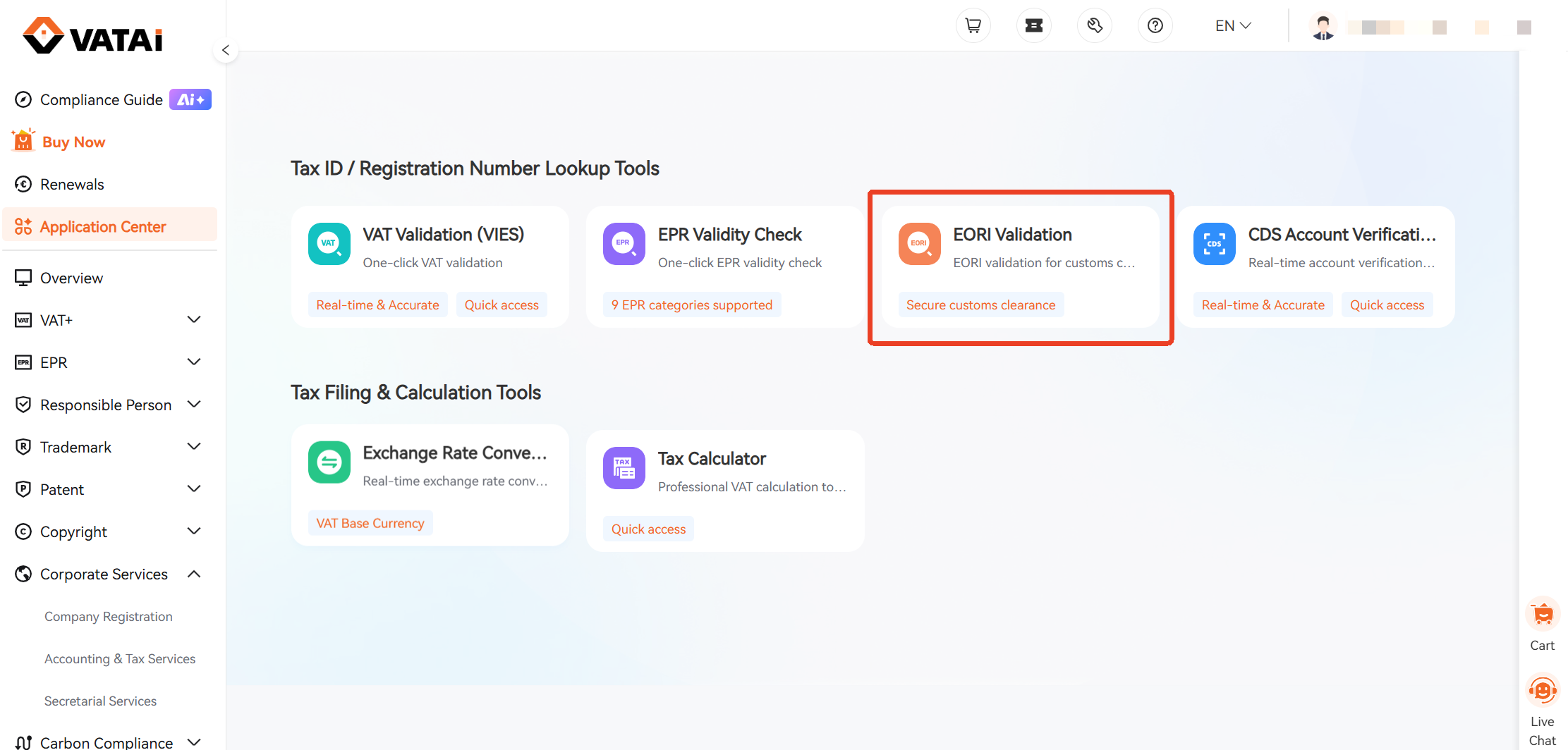
A: In VATAi's backend, you can directly check whether EORI numbers from all countries are valid. Simply enter the EORI number and click search.
If you have not applied for an EORI number yet, or are facing issues such as customs rejection or unclear documents during the application process, feel free to contact VATAi compliance experts or leave a message in the comments. Share this with European sellers currently applying for EORI to avoid blind submissions!
Need Help with EU/UK VAT Compliance?
Book a free call with VATAi today to get your personalised EPR rodamap for your e-commerce business
