Mastering EUDR Compliance: Essential Guide to the EU Deforestation Regulation
 VATAi Team
The global push for sustainability is reshaping international trade, and the European Union is leading the way. If you sell products in the EU market, a groundbreaking piece of legislation – the EU Deforestation Regulation (EUDR) – demands your immediate attention. Far more than just another environmental policy, EUDR sets strict rules to ensure products sold within the EU are deforestation-free.
The clock is ticking – LOUDLY. With the main enforcement deadline of December 30, 2025, now just weeks away, immediate action is critical. Non-compliance isn't just a future risk; it means losing access imminently to one of the world's largest consumer markets. This guide is designed for e-commerce sellers, importers, exporters, and manufacturers dealing with affected products. We'll break down exactly what EUDR compliance entails, who needs to act, and the practical steps required now to secure your business's future in the EU.
What is EUDR and Why Does It Matter?
The EU Deforestation-free Products Regulation (Regulation EU 2023/1115) is a landmark EU law aimed at minimizing the EU's contribution to global deforestation and forest degradation. Put simply, it mandates that specific commodities and products placed on or exported from the EU market must be proven to be:
- Deforestation-free: Produced on land that was not subject to deforestation after December 31, 2020.
- Legally produced: In compliance with all applicable laws of the country of production (land use, labour, environment, human rights, taxation, etc.)
While the regulation entered into force in June 2023, the main compliance obligations begin applying from December 30, 2025. Preparing for EUDR compliance involves significant supply chain mapping and data collection, processes that require substantial lead time. If you haven't started, now is the final window.
Latest Update: The October 21 2025 Announcement
On 21 October 2025, the European Commission announced measures to ease the transition to EUDR compliance while keeping the climate goals intact. Check the official press release.
Key points:
- The original deadline of 30 December 2025 remains for large and medium enterprises—but a six-month transition period for inspections and enforcement may apply.
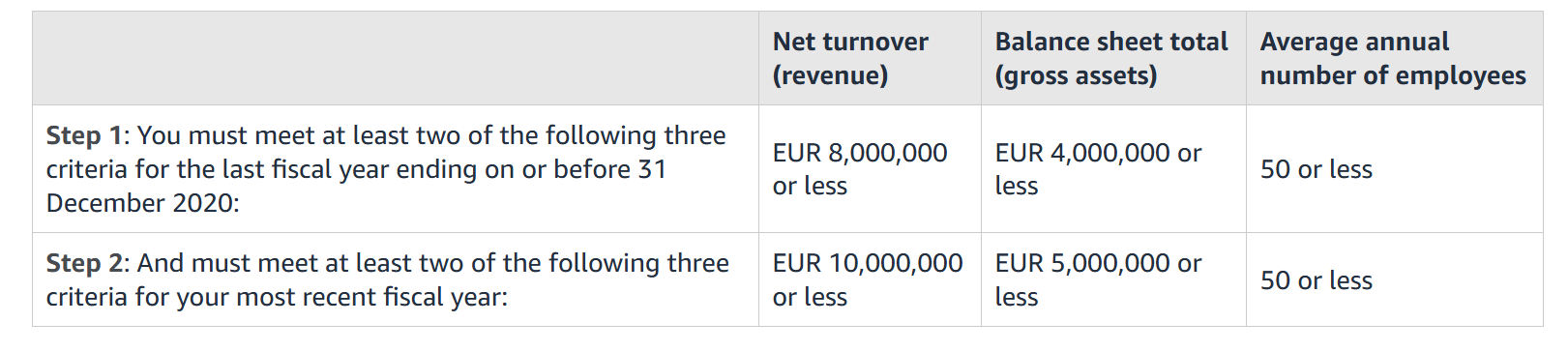
- Small and micro-enterprises may receive extended relief: for example, simpler due-diligence statements or delayed full enforcement until 30 December 2026.
- Simplified due-diligence options are being explored for smallholders and SMEs, recognising resource constraints.
- The EU’s country benchmarking system (low / standard / high risk) will be published in early 2026 to help businesses assess supply-chain risks.
- The focus is on reducing administrative burden while maintaining the core climate objective of the regulation.
What this means for e-commerce sellers: enforcement starts as planned, but regulators will focus initially on support rather than penalties. Nonetheless, your preparation must start now.
➤ Six-Month Deferral for Small and Micro Enterprises
Which Products Fall Under EUDR? Understanding the Scope
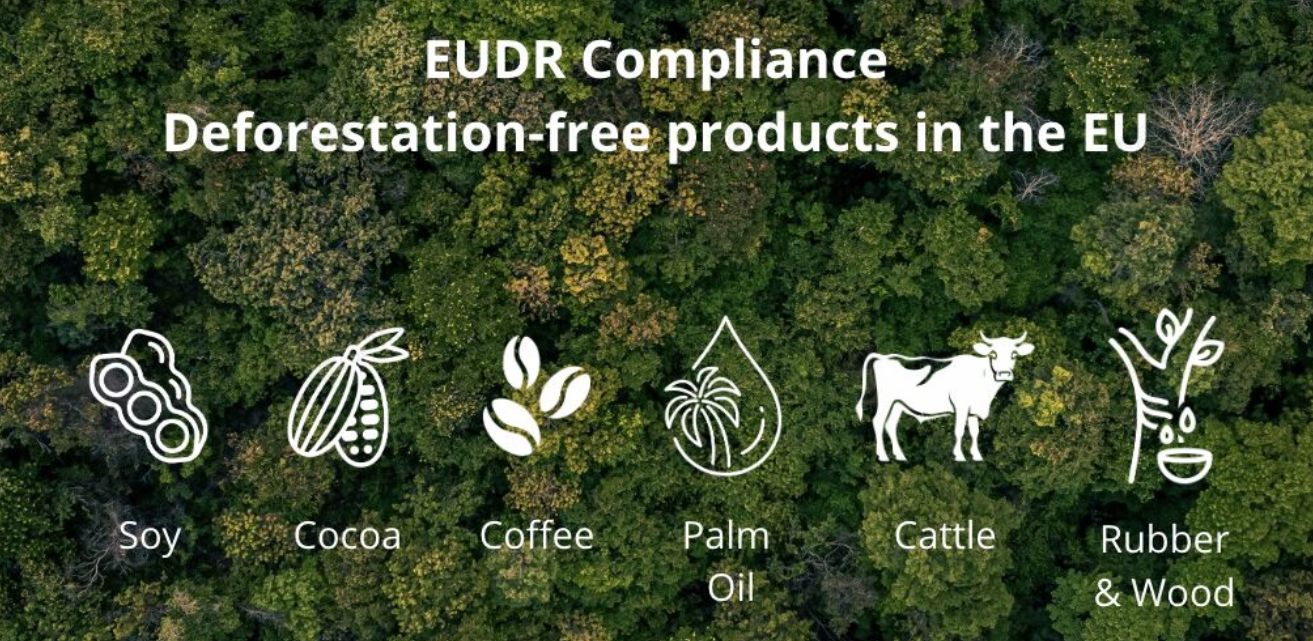
EUDR targets specific commodities known to be major drivers of deforestation. If your products contain or are derived from these, you are affected:
The 7 Key Commodities:
- Cattle
- Cocoa
- Coffee
- Oil Palm
- Rubber
- Soya
- Wood
Crucially, EUDR extends beyond raw materials to cover numerous "derived products" listed in Annex I of the regulation. This means items made from or containing these commodities are also in scope. Examples relevant to e-commerce sellers include:
- Leather goods (from Cattle)
- Chocolate (from Cocoa)
- Coffee products (obviously!)
- Palm oil derivatives used in cosmetics, food, and biofuels (from Oil Palm)
- Tires, gloves, natural latex items (from Rubber)
- Soybean oil, animal feed (from Soya)
- Furniture, paper products, charcoal, packaging (from Wood)
It is vital to check the specific Combined Nomenclature (CN) codes listed in Annex I of the Regulation to confirm if your exact products fall under EUDR requirements. Note that packaging material used exclusively to support, protect or carry another product is generally excluded, but packaging sold as a product itself (like boxes or pallets) under specific HS codes is covered. Products made entirely from recycled materials are also excluded.
The Core Pillars of EUDR Compliance: What Sellers Must Do
Achieving EUDR compliance rests on meeting the conditions in Article 3 and exercising due diligence, which involves four essential pillars:
- Due Diligence Statement (DDS): Before placing products on the EU market or exporting them, the designated "Operator" must submit a DDS through the EU's central Information System. This statement confirms the products meet the deforestation-free and legality criteria.
- Deforestation-Free Verification: You must demonstrate, with verifiable evidence, that the commodities were produced on land not subject to deforestation after the December 31, 2020 cut-off date. 'Deforestation' means the conversion of forest to agricultural use.
- Legality Verification: You need to prove that the production process complied with the relevant legislation in the country of production. This includes laws related to land use rights, environmental protection, forest-related rules, third parties' rights (including indigenous peoples' rights and FPIC), labour rights, human rights, tax, anti-corruption, trade, and customs regulations.
- Geolocation Data: Operators must collect precise geolocation coordinates (latitude and longitude using at least six decimal digits) for all plots of land where the relevant commodities were produced. For plots over four hectares (except for cattle), polygons describing the perimeter are required. For cattle, geolocation refers to all establishments where they were kept. This requires robust supply chain traceability.
Who Needs to Comply? Operators vs. Traders Explained
EUDR assigns different levels of responsibility:
- Operators: Any natural or legal person who, in the course of a commercial activity, first places relevant products on the EU market or exports them. For imports, this is typically the importer indicated in the customs declaration. Operators bear the primary responsibility for conducting due diligence and submitting the DDS. If the operator placing goods on the market is established outside the EU, the first entity established within the EU making those goods available is also deemed an operator.
- Traders: Any person in the supply chain other than the operator who, in the course of a commercial activity, makes relevant products available on the market after they have been placed on the market.
- Large Traders (non-SMEs): Have the same obligations as operators. They must ascertain that due diligence was exercised upstream and submit their own DDS, potentially referencing the upstream one.
- SME Traders: Have lighter obligations. They must collect and keep records for 5 years identifying their suppliers and customers, and the reference numbers of the associated DDSs. They do not need to exercise due diligence themselves or submit a DDS.
Impact on Non-EU Businesses: While EUDR obligations technically fall on EU-based Operators and Traders, the practical impact extends globally. Suppliers outside the EU are essential partners in compliance. They must provide their EU customers (the Operators) with the necessary information, especially the critical geolocation data and evidence of legality required under Article 9. Failure by a non-EU supplier to provide this data effectively blocks their products from legally entering the EU market.
Mark Your Calendar: Key EUDR Implementation Deadlines
Understanding the timeline is critical for immediate planning:
- June 29, 2023: EUDR entered into force.
- December 30, 2025: IMMINENT DEADLINE! The main due diligence obligations apply to Operators and Large Traders.
- June 30, 2026: Due diligence obligations apply to Micro and Small Enterprises (established as such by Dec 31, 2020) acting as Operators or Traders, except for wood products already covered by the repealed EUTR.
Given the complexity of data collection, especially geolocation, businesses must finalize their preparations immediately to meet the fast-approaching December 30, 2025, EUDR enforcement date.
Your Roadmap to EUDR Compliance: Practical Steps for Immediate Action
Achieving EUDR compliance requires a systematic approach based on the due diligence system:
- Map Your Supply Chain (NOW): If you haven't already, identify all products containing in-scope commodities. Trace these back through your suppliers to the specific plots of land where the raw materials originated. This level of supply chain traceability is foundational and time-consuming.
- Collect Mandatory Data (URGENTLY): Gather comprehensive information for each consignment:
- Product description and quantity.
- Commodity details.
- Country (and region, if applicable) of production.
- Precise geolocation coordinates for all relevant land plots, plus date/time range of production.
- Contact details for your direct suppliers.
- Evidence demonstrating compliance (e.g., satellite imagery analysis, supplier declarations, audit reports).
- Conduct Risk Assessment: Evaluate the risk of non-compliance for each supply chain. Factors include the deforestation risk associated with the country/region of origin, prevalence of forest degradation, supplier reliability, complexity of the supply chain, and corruption levels. The EU will provide a country benchmarking system (low, standard, high risk) to aid this assessment.
- Implement Risk Mitigation (If Necessary): If your assessment identifies a non-negliglible risk, you must take steps to mitigate it before the deadline. This could involve requesting additional information, conducting independent audits, urgently changing suppliers, or investing in supplier capacity building.
- Prepare and Submit the Due Diligence Statement: Once due diligence is complete and demonstrates compliance (no or only negligible risk found), compile the information and prepare to submit the DDS via the designated EU Information System before goods enter or leave the EU market post-deadline. Keep DDS records for 5 years.
The Stakes Are High: Consequences of Non-Compliance Are Imminent
Ignoring EUDR is not an option, especially with the deadline weeks away. National competent authorities within EU member states will enforce the regulation through checks and audits starting December 30, 2025. The consequences of EUDR non-compliance can be severe:
- Hefty Fines: Penalties can reach up to at least 4% of the Operator's or Trader's total annual Union-wide turnover.
- Confiscation: Non-compliant products can be confiscated at customs or withdrawn from the market. Revenue generated from non-compliant transactions may also be confiscated.
- Temporary Market Exclusion: Operators/Traders may be temporarily banned (up to 12 months) from placing relevant products on the EU market or from public procurement/funding.
- Public Disclosure: Final judgments against legal persons for infringements will be published online, leading to significant reputational damage.
Leveraging Technology for EUDR Success
The complexity of EUDR compliance, particularly the requirements for geolocation data and supply chain traceability across potentially fragmented global networks, makes technology indispensable. Manual tracking is often unfeasible and prone to errors, especially under time pressure. Solutions like blockchain-based traceability platforms, satellite imagery analysis tools, supply chain mapping software, and integrated data management systems are becoming crucial. These technologies can help automate data collection, verification, risk assessment, and DDS preparation.
At VATAi, we understand that EUDR adds critical urgency to the already complex web of global compliance, alongside VAT, EPR, customs, and product safety. While focusing on tax and environmental compliance, we recognize the interconnectedness of these regulations. Our platform and expertise can help streamline your overall compliance strategy, ensuring that managing requirements like VAT and EPR doesn't detract from your critical, last-minute efforts to achieve EUDR readiness. We partner with leading traceability experts to help you build a holistic, future-proof compliance framework. Schedule a free consultation today.
Conclusion
The EU Deforestation Regulation marks a significant shift towards mandatory supply chain due diligence. For businesses involved with cattle, cocoa, coffee, oil palm, rubber, soya, or wood products, achieving EUDR compliance by the December 30, 2025 deadline (or June 30, 2026 for eligible SMEs) is absolutely essential for continued access to the EU market.
This is not merely a legal hurdle; it's a strategic imperative with an imminent deadline. Finalizing preparation, robust data collection, transparent supply chain mapping, and potentially leveraging technology are key tasks for the coming weeks. Start your EUDR compliance journey today – audit your products and supply chains, engage urgently with your suppliers to gather the necessary data, and seek expert guidance to navigate this complex but critical regulation before time runs out. Sustainable trade is the future, and compliance is your license to operate within it.
FAQs about EUDR
What exactly is EUDR?
EUDR stands for the EU Deforestation Regulation. It's a law requiring companies placing specific commodities (cattle, cocoa, coffee, oil palm, rubber, soya, wood) and derived products on the EU market (or exporting them) to prove they are deforestation-free (produced on land not deforested after Dec 31, 2020) and legally produced according to the laws of the origin country.
Which products are affected by EUDR?
The regulation covers cattle, cocoa, coffee, oil palm, rubber, soya, and wood, plus a wide range of derived products listed in Annex I made from these, such as leather, chocolate, furniture, tires, palm oil derivatives, printed paper, and more. Always check the specific CN codes in the regulation's annex. Products made entirely from recycled materials are excluded.
What are the main compliance steps for EUDR?
The core steps involve exercising due diligence, which includes:
- Mapping your supply chain back to the plot of land.
- Collecting mandatory data, including precise geolocation coordinates.
- Conducting a risk assessment for deforestation and illegality.
- Implementing mitigation measures if risks are found to be non-negligible.
- Submitting a Due Diligence Statement (DDS) via the EU's Information System before market placement or export.
What's the difference between an Operator and a Trader under EUDR?
An Operator is the entity that first places the relevant goods on the EU market (importer) or exports them. They have the primary due diligence responsibility. A Trader buys or sells these goods after they have been placed on the market within the EU. Large traders (non-SMEs) have obligations similar to operators, while SME traders have lighter record-keeping duties if sourcing from compliant entities.
When do businesses need to comply with EUDR?
- For most Operators and large Traders: December 30, 2025.
- For Micro and Small Enterprises (established by Dec 31, 2020, except for EUTR wood products): June 30, 2026.
What happens if a business doesn't comply with EUDR?
Penalties can be severe and include substantial fines (up to at least 4% of EU turnover), confiscation of non-compliant products and related revenues, temporary exclusion from the EU market and public procurement, and public disclosure of judgments.
How much does EUDR compliance cost?
The cost varies significantly based on factors like the complexity of your supply chain, the number of products and suppliers involved, the need for technology solutions (traceability software, satellite monitoring), potential third-party audits, and internal resources required. Businesses should budget for investments in data collection systems, supplier engagement, risk assessment, and potentially consulting services. The cost of non-compliance, however, is likely far greater.
Do non-EU companies need to worry about EUDR?
While the legal obligation rests on the EU-based Operator, non-EU suppliers must provide the required data (especially geolocation and legality evidence) to their EU customers according to Article 9 requirements. If a supplier cannot provide this proof, their products cannot legally enter the EU market. Therefore, EUDR effectively sets a global standard for supply chain transparency for these commodities.
Need Help with EUDR Compliance?
Book a free call with VATAi today to find tailored solutions for your e-commerce business
